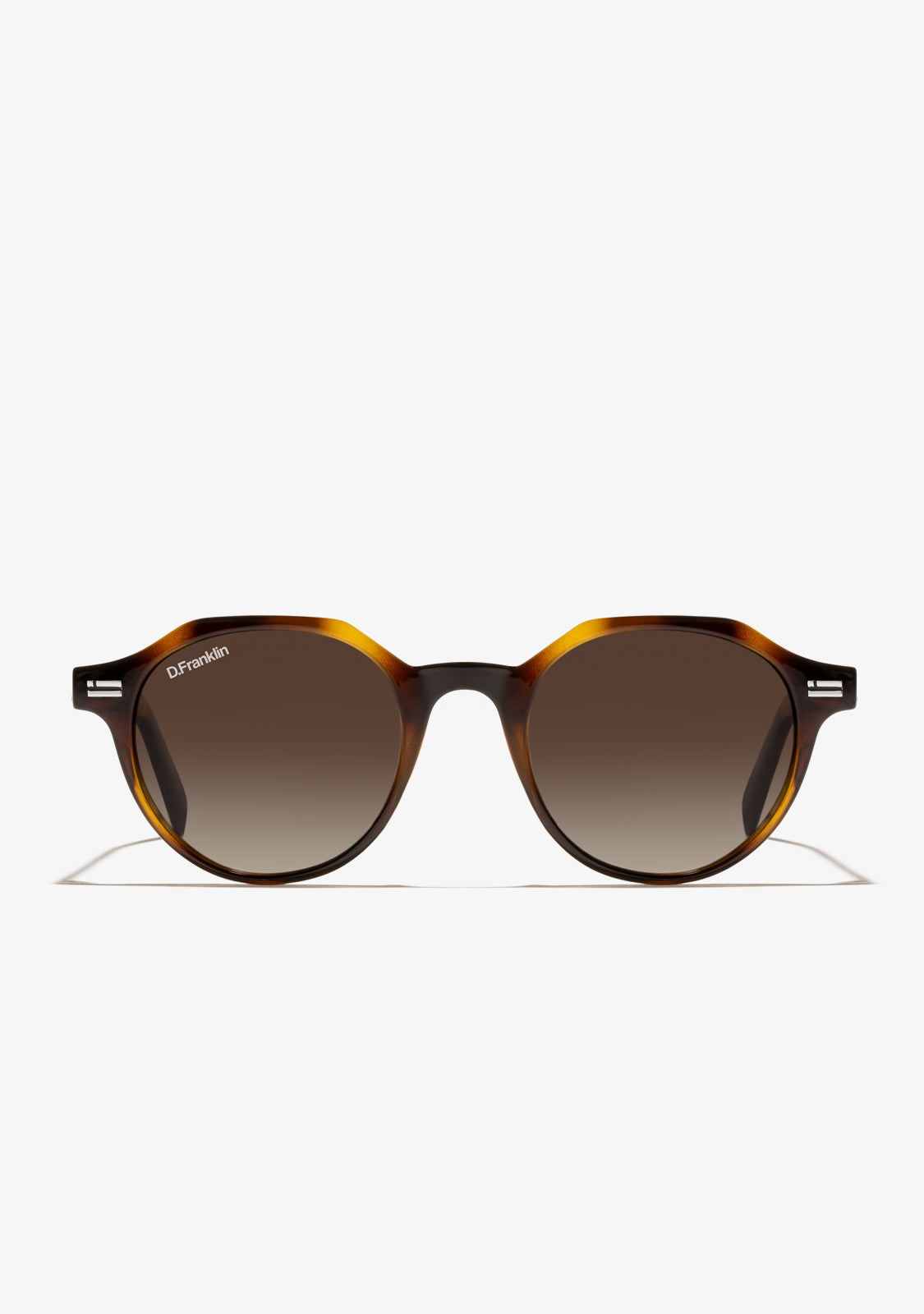
These frames stand out for their robust, long-lasting design and their ability to enhance any outfit with bold personality, available in both thin and thick lines with smoky, transparent, or matte finishes.
At D.Franklin, we offer a wide selection of acetate sunglasses that combine quality, comfort, and design aligned with the latest trends.
Discover all the possibilities, the top tips for choosing the best acetate frame sunglasses, and how to pair them perfectly with any style.
Why choose acetate frame sunglasses
acetate frame sunglasses are among the most versatile, durable, and comfortable models, available in a wide variety of colors and finishes, making them a reliable choice for both eye protection and style.
At D.Franklin, our acetate frame sunglasses offer:
Robust and durable design: Ideal for daily use without compromising shape or ergonomics.
Variety of colors and shapes: From classic black to tortoiseshell, smoky, transparent, or patterned styles.
Lightweight and comfortable frames: Designed to adapt perfectly to the face with a flexible, light fit.
UV400 protection: Advanced shielding that blocks ultraviolet rays for optimal eye care.
Fashion-forward designs: A versatile style that works with retro, casual, or sophisticated outfits.
How to choose the best acetate frame sunglasses
Face shape:
Square frames flatter round faces, while oval or round shapes help soften angular features.
Color and style:
Dark tones add elegance, while bright or translucent colors give a fresh, modern twist. Mixing frame fronts and temples with different patterns and finishes adds a vintage touch that suits retro or chic styles.
Lens type:
Polarized lenses are ideal for reducing glare and improving visibility in bright conditions, but you can also go for gradient, mirrored, or photochromic lenses.
How to style Acetate sunglasses
Sunglasses made from high-quality thermoacetate materials are a versatile accessory that pairs easily with any outfit:
Retro vibe: Go bold with oversized models to complement vintage dresses and gold accessories.
Modern touch: Transparent sunglasses match beautifully with neutral-toned clothing and minimalist cuts.
Choosing by measurements and contact points
Compare the front, bridge and temples with glasses that already fit well. The frame should stay put without persistent pressure or constant readjustment. A men's or unisex label does not define one standard size.
When comparing shapes, separate the outline from the size. Large round glasses create a different effect from narrow oval ones, even though both use curves. Square corners make the front more defined; a thin, transparent or low-contrast frame can soften that presence. Face shape can guide an aesthetic preference, but it does not require one particular silhouette.
Front and temple materials are another part of the decision. A metallic appearance does not identify the composition, and frame thickness alone does not establish weight. Check the stated materials and try the contact points: the bridge should support the frame and the temples should follow your head without relying on a cap to compensate for fit.
Materials, fit and care
Lens colour, filter category and UV protection are separate specifications. Check each one for the chosen variant. A darker tint or mirrored surface does not on its own establish stronger UV protection; polarisation is another distinct feature.